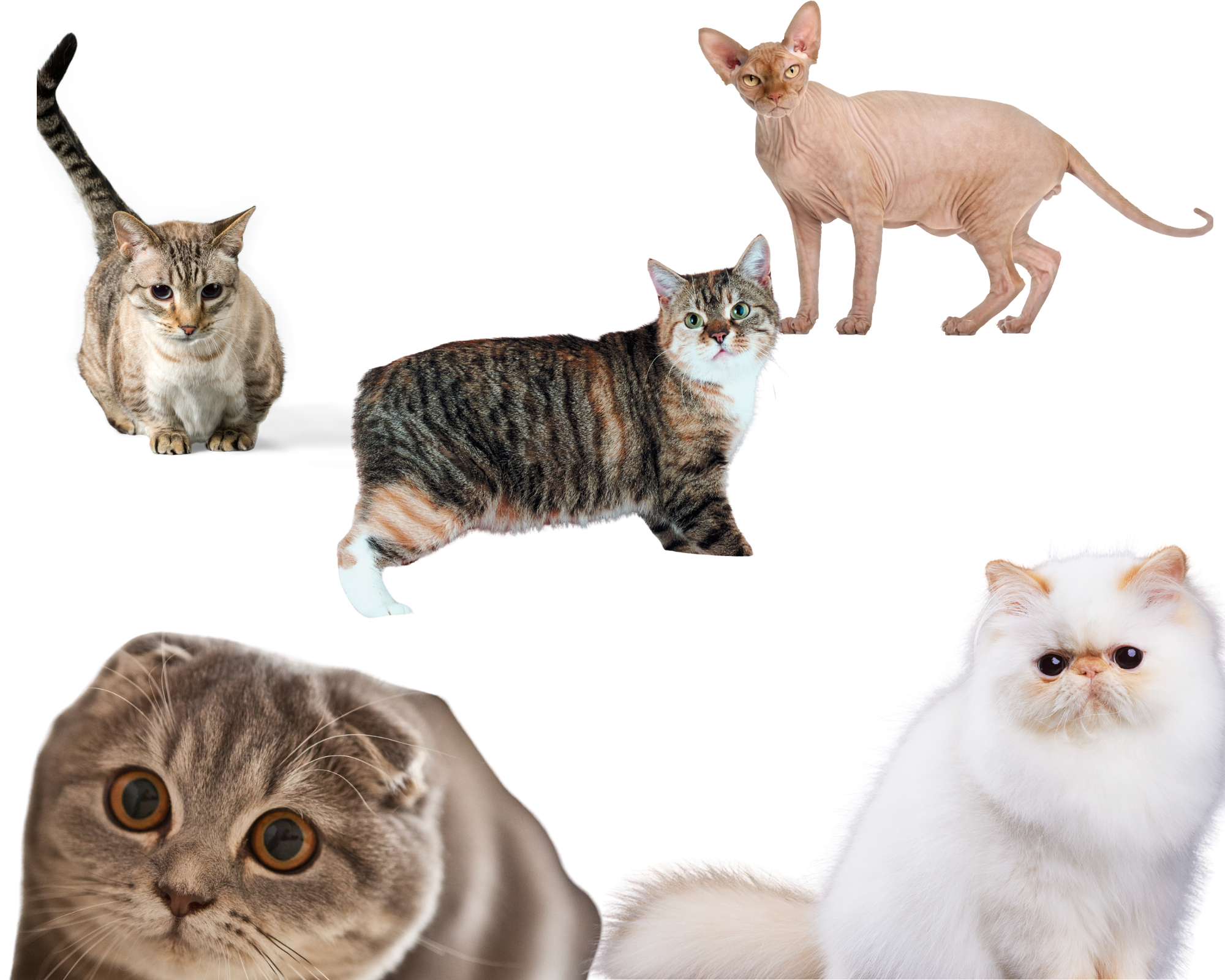
For this blog I wanted to discuss different cat breeds. While certain cats may appear cute to our eyes alone, if we know more about cat health and hidden defects, it is imperative that the health and welfare of cats are considered. Also whether we have the financial and time resources that the needs of these cats have. Cats can inherit defects and if a cat is inbred with siblings or relatives this can run the risk of cats inheriting these. A lot of these cats listed below are looking for new homes in rescue centres and a reputable rescue will give you all the information about that individual cat as health problems can be on a spectrum.
Persian cats, due to their flat faces can experience eye problems, have difficulty grooming themselves as they have a shorter muzzle due to their flat face, dental problems and breathing challenges. Their coats mean they can get it matted very easily.
Munchkin cats have shorter limbs therefore have difficulty jumping – as a prey and predator species cants feel safer up high – this can be an emotional problem for them as well as a pain problem. They have an increased risk of spinal problems and may not be able to groom themselves. These are all problems for the cat as they inhibit natural behaviour, cause pain and as cats are fastidious creatures – not grooming can be really hard for them.
The Manx Cat has no tail and as the spine bone of a cat goes all the way down the tail this means that a shorter spine can cause problems. They cannot exhibit themselves through their body language which puts them at a disadvantage with other cats and us too as we cannot look at their tail which suggests they are frustrated.
A Scottish Fold has folded ears which indicates lack of cartilage – this lack of cartilage is through the body though which can mean osteoarthritis. Pain can make a cat very grumpy. There flatter face can mean they have breathing challenges.
Hairless cats such as the Sphynx can get sunburnt even just from the window. Cats have rough tongues and as they still groom themselves this can cause problems on their skin in terms of lesions. They also have no whiskers which means they cannot judge space size easily and can hurt themselves.
References:
Cats Protection. The Welfare Guide. 2017 Edition.