Body language
I can read a lot from a cat’s body language, and I’ve learned that context is everything. Here’s generally how I interpret these behaviours.
When I see a cat’s tail quivering, I usually take it as excitement and anticipation. Often it’s something positive, like waiting for food or a favourite routine.
When I observe mild stress signals, I look for a combination of subtle cues rather than just one behaviour. I notice slightly sideways “pixie-like” ears, a small shake-off, a lip lick when no food is present, and then a yawn followed by another lip lick. A yawn alone doesn’t always mean tiredness, and a lip lick doesn’t always mean food—so I always consider the full picture.
When it comes to spraying, I pay close attention to location and context. If a cat is spraying outside the litter tray, I consider whether it might be related to feeling insecure—especially near doors or windows where other cats could be seen or smelled. If it happens in or around the tray itself, I think about practical factors too, like tray placement or whether the setup makes the cat feel exposed or uncomfortable.
Staring behaviour between cats is something I interpret very carefully. I know that direct staring can be part of tension, because in cat social structure it can escalate conflict. I also think about ways to reduce that tension, such as allowing visual barriers so cats don’t constantly feel watched. I look for posture differences too—one cat may be poised and ready to move, while another is more settled. Raised fur can also suggest worry or heightened arousal.
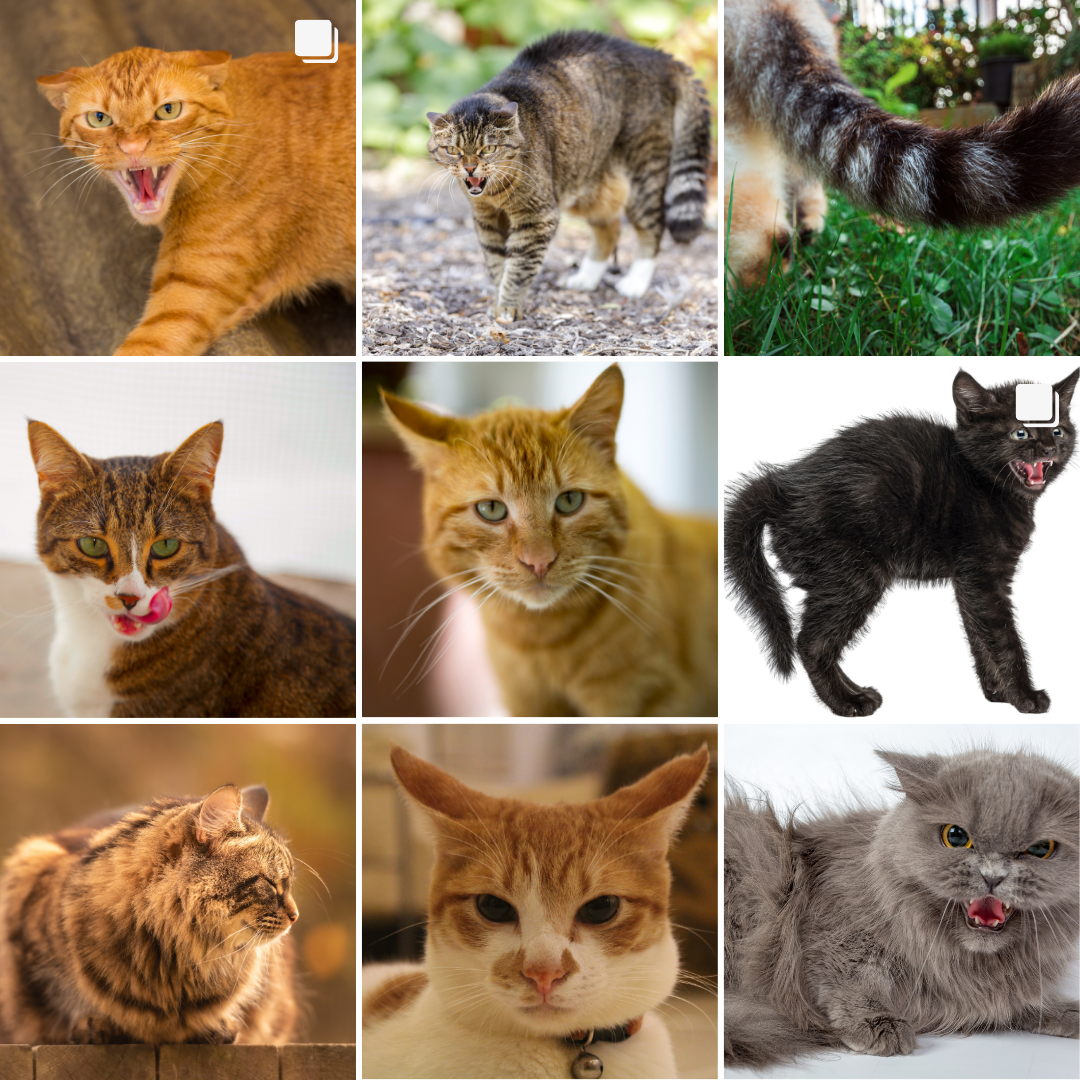
When I see a cat arching its back, I interpret it as a defensive posture. The cat is trying to appear larger and may be feeling threatened. If there’s a low growl, I take that as a clear warning sign. A low tail rather than a high one often tells me the cat feels vulnerable, and lip licking in that moment is another stress signal rather than anything to do with food.
On the other hand, I also recognise the relaxed yawn. In a comfortable cat, I see soft eyes, a loose body posture, front legs splayed out, and a belly exposed in a safe environment. After a big yawn, I often see stretching, claw retraction, and settling down to rest. That’s when I feel confident the cat is content.
In multi-cat interactions, I pay attention to subtle bullying or resource blocking. A cat might position itself across pathways, doors, food, or litter access points, which can create quiet pressure on another cat. Even small signals—like an ear twitch—can show underlying tension. I also notice when one cat changes behaviour, such as stopping what it’s doing or avoiding eye contact.
Sometimes I see what looks like confidence from one cat, but I also consider insecurity underneath it. A cat that moves closer or rubs its chin on furniture may be depositing scent, which helps it feel more secure in the environment. I keep in mind that “bullying” behaviour in cats can sometimes come from insecurity.
When a cat moves its head forward to investigate something, I interpret it as cautious curiosity. A low tail and careful posture usually tell me it’s unsure rather than confident.
I also pay attention to scent-marking behaviour. Cats have scent glands on their face and between their toes, so when I see rubbing, I understand it as a way of making an area feel familiar and safe. Strong artificial scents like air fresheners or citrus can be overwhelming for them, so I consider that in their environment.
When I see a shoulder lick after interaction, especially with flattened ears or quick head turns, I interpret it as possible overstimulation or frustration. It can mean the cat is trying to regulate itself after contact rather than fully enjoying prolonged touch.
A full-body shake-off is another behaviour I watch for. I understand it as a way of releasing tension after a stressful or intense moment, almost like resetting.
In carriers or unfamiliar spaces, I notice crouched bodies, avoidance of eye contact, head turning away, and ear movements that suggest uncertainty. In those situations, I interpret the cat as feeling worried or unsafe.
Tongue flicking combined with turning away can also signal uncertainty. Even if the cat is leaning into touch, I don’t assume enjoyment—I look at the whole body to decide whether it’s comfort, confusion, or conflicted feelings.
And I keep in mind that behaviour can sit on a spectrum, especially around grooming or interaction. Sometimes what looks like tolerance is actually mild stress, and sometimes what looks like stress is just a brief moment of adjustment before relaxation. I speak about body language in my latest video and here are some pictures of cats below - the ears can be a massive source of communication.